
Pre-Engineered Buildings in Healthcare: The Bhutan Quarantine Centre Case Study
Building the Future of Healthcare Infrastructure in Bhutan: Saxena Marine Tech Pvt. Ltd.’s Pre-Engineered Quarantine Centre
Introduction: Bhutan’s Leap in Modern Healthcare Construction
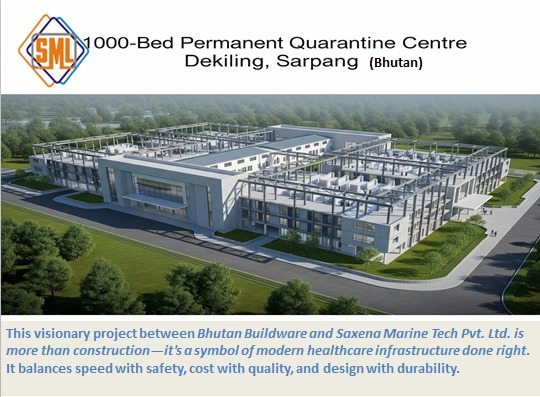
In a time where rapid-response healthcare infrastructure has become a global necessity, Bhutan is setting an example by investing in advanced, sustainable building technologies. At the heart of this transformation is the partnership between M/s Penjor Construction Pvt. Ltd and Saxena Marine Tech Pvt. Ltd. (SML)—a leader in Pre-Engineered Buildings (PEBs)—to construct a 1000-bedded Permanent Quarantine Centre at Dekiling, Sarpang, Bhutan. This blog explores the entire scope of the project, its engineering brilliance, economic viability, and how it stands as a model for future healthcare construction globally.
Section 1: Understanding the Project Scope
The project involves designing, fabricating, supplying, and erecting multiple Pre-Engineered Building (PEB) structures tailored to Bhutan’s unique healthcare demands. This facility, with a capacity of 1000 beds, is strategically structured into Package-A and Package-B, covering various essential blocks like quarantine wards, service areas, medical units, staff housing, and support facilities.
Key Stakeholders:
- Client: M/s Penjor Construction Pvt. Ltd
- PEB Provider: Saxena Marine Tech Pvt. Ltd. (SML)
- Location: Dekiling, Sarpang, Bhutan
- Project Nature: Permanent Quarantine Centre
Section 2: The Role of Pre-Engineered Buildings (PEBs) in Healthcare
PEBs are revolutionizing how nations respond to healthcare infrastructure demands:
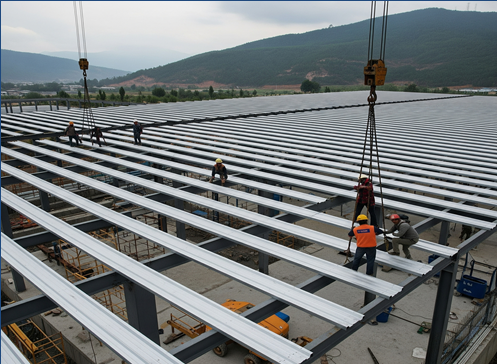
- Speed: Rapid erection and reduced construction timelines
- Flexibility: Modular and expandable building designs
- Sustainability: Reduced carbon footprint and recyclable materials
- Insulation & Hygiene: Superior wall and roof insulation improve energy efficiency and hygiene standards
- Cost Efficiency: Less wastage, controlled cost
SML’s engineering approach aligns seamlessly with Bhutan’s healthcare vision, making PEBs the ideal solution.
Section 3: Design Philosophy and Standards
SML’s design standards follow:
- IS Codes (Indian Standards) for structural and design integrity
- AWS D1.1/D1.1M:2008 for welding standards
- Site-Specific Loads & Deflection Limits per Bhutanese climate and soil conditions
The buildings are optimized for durability, thermal performance, and adaptability to regional weather extremes ranging from -5°C to +35°C.
Section 4: Package-A – The Core Quarantine Blocks
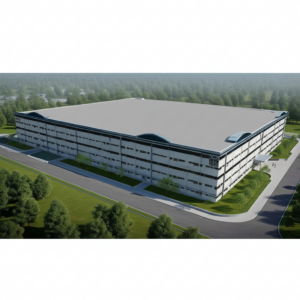
Quarantine Block Type-1 (20 Bedded):
- Quantity: 16 Identical Buildings
- Area per Block: 805.33 sqm
- Roof: Double-sloped with XLPE insulation
- Wall System: Cement Fibre Boards with LGFS (Light Gauge Framing System)
- Flooring: Mezzanine with GI Deck Sheets
- Wind Bracing: Diagonal cross bracing for lateral stability
- Rate: ₹14,000/sqm
The focus here is on high-capacity, hygienic, thermally regulated wards with zero interior columns, ensuring flexibility in room layout.
Section 5: Package-B – Supporting Infrastructure
This package ensures the quarantine centre functions as a self-contained ecosystem.
Facility Breakdown:
- Service Block: 332.5 sqm
- Office Block: 172 sqm
- Laundry: 143.5 sqm
- Kitchen & Dining: 245 sqm
- Isolation Units: 205.5 sqm (x3)
- 1-Bed & 2-Bed Quarantine Blocks: For critical and intensive care
- Accommodation: 1BHK, 2BHK, 6-Bedded Blocks for staff
- Security & Mixed-Use Blocks: For administrative and safety functions
- Rate: ₹14,400/sqm across all structures
These facilities ensure not just medical care but also operational support, infection control, and administrative efficiency.
Section 6: Superior Material Engineering
Structural Steel:
- Primary Members: ASTM A572M Grade 50
- Secondary Members: IS 2062 E250, pre-galvanized
Roofing & Wall Cladding:
- Roof: PPGL with 13mm XLPE insulation
- Wall Panels: Cement fibre board sandwich with Rockwool insulation
Bracing & Connections:
- Rod and angle bracing, high-strength bolts (ASTM A325), anchor bolts (IS:2062)
Painting:
- Red oxide primer + synthetic enamel paint for corrosion resistance and long life
Section 7: Key Features and Inclusions
- Flashings, gutters, and downpipes
- Bracing systems and anchoring
- Hardware and sheeting fasteners
- Water discharge systems
- Full thermal and moisture barrier detailing
Not Included:
- Civil and electrical works
- Doors, windows, HVAC, fireproofing, etc.
This segregation ensures crystal-clear scope management and seamless multi-vendor integration.
Section 8: Commercial Terms and Execution Timeline
Delivery Schedule:
- Drawings: 2 weeks from PO
- Material Dispatch: 8–10 weeks from approval
Erection: 8 weeks + 2 weeks finishing
Section 9: Division of Responsibilities
SML (Seller):
- Fabrication, delivery, erection
- Site coordination, safety compliance
Penjor Construction (P) Ltd (Buyer):
- Site leveling, bolt setting
- Electricity, water, material safety, permits
- Grouting and civil interface works
Section 10: Impact and Legacy
The Permanent Quarantine Centre at Dekiling is a benchmark in South Asia. It:
- Strengthens Bhutan’s pandemic preparedness
- Sets a template for modular healthcare campuses
- Demonstrates Indo-Bhutan engineering collaboration
- Inspires future PEB-based government infrastructure
Final Thoughts
This visionary project between Bhutan Buildware and Saxena Marine Tech Pvt. Ltd. is more than construction—it’s a symbol of modern healthcare infrastructure done right. It balances speed with safety, cost with quality, and design with durability.
If you’re seeking to construct scalable, efficient, and future-ready healthcare or institutional buildings, PEB is the solution. And SML is your partner in precision.
📞 Contact Saxena Marine Tech Pvt. Ltd. for your next infrastructure project. 🌐 Visit: www.smlpeb.com ✉️ Email: info@smlpeb.com 📞 Call: +91-9899860602
📌 Frequently Asked Questions (FAQs)
- What is the purpose of the quarantine centre built by Saxena Marine Tech Pvt. Ltd. in Bhutan?
The facility serves as a 1000-bedded permanent quarantine centre in Dekiling, Sarpang, Bhutan. It is designed to enhance the country’s healthcare infrastructure and support future pandemic or emergency response needs. - Who are the key stakeholders involved in this quarantine centre project?
The project is a collaboration between M/s Penjor Construction Pvt. Ltd (client) and Saxena Marine Tech Pvt. Ltd. (SML) (PEB design and execution partner). - What is a Pre-Engineered Building (PEB) and why was it chosen for this project?
A PEB is a factory-built structure made from standardized components. It was chosen for this project due to its speed of construction, cost-efficiency, energy performance, and adaptability to Bhutan’s climatic conditions. - What building types are included in the project under Package-A and Package-B?
- Package-A includes 16 identical 20-bedded quarantine blocks.
- Package-B includes service blocks, isolation wards, staff accommodations, laundry, kitchen/dining, infirmary, waste management units, and security facilities.
- How much area does each quarantine block cover?
Each 20-bedded quarantine block under Package-A spans approximately 805.33 square meters. - What materials are used for structural integrity and insulation?
The project uses high-strength steel (ASTM A572), PPGL roofing with 13mm XLPE insulation, and cement fibre boards with Rockwool insulation to ensure thermal efficiency and durability. - How long does it take to deliver and erect the entire PEB structure?
From drawing submission to completion, the project follows a timeline of about 10–12 weeks for material readiness and another 8–10 weeks for erection and finishing, depending on site readiness. - Are these PEB structures resistant to extreme weather conditions in Bhutan?
Yes, the buildings are designed as per Indian Standards and engineered to withstand temperature variations from -5°C to +35°C, along with appropriate wind bracing systems. - What is the cost per square meter for the structures in Package-A and Package-B?
- Package-A: ₹14,000/sqm
- Package-B: ₹14,400/sqm
- What is excluded from the scope of work provided by SML?
Excluded items include civil works, electrical and plumbing, fireproofing, doors, windows, HVAC systems, and architectural finishes. - What are the responsibilities of Bhutan Buildware as the client?
The client is responsible for anchor bolt setting, site preparation, supply of utilities (electricity, water), permits, and overall site security. - How does this project benefit Bhutan’s healthcare infrastructure in the long term?
This facility provides scalable and resilient healthcare capacity, enables rapid response to future health crises, and stands as a model for modular, sustainable healthcare development in South Asia.